

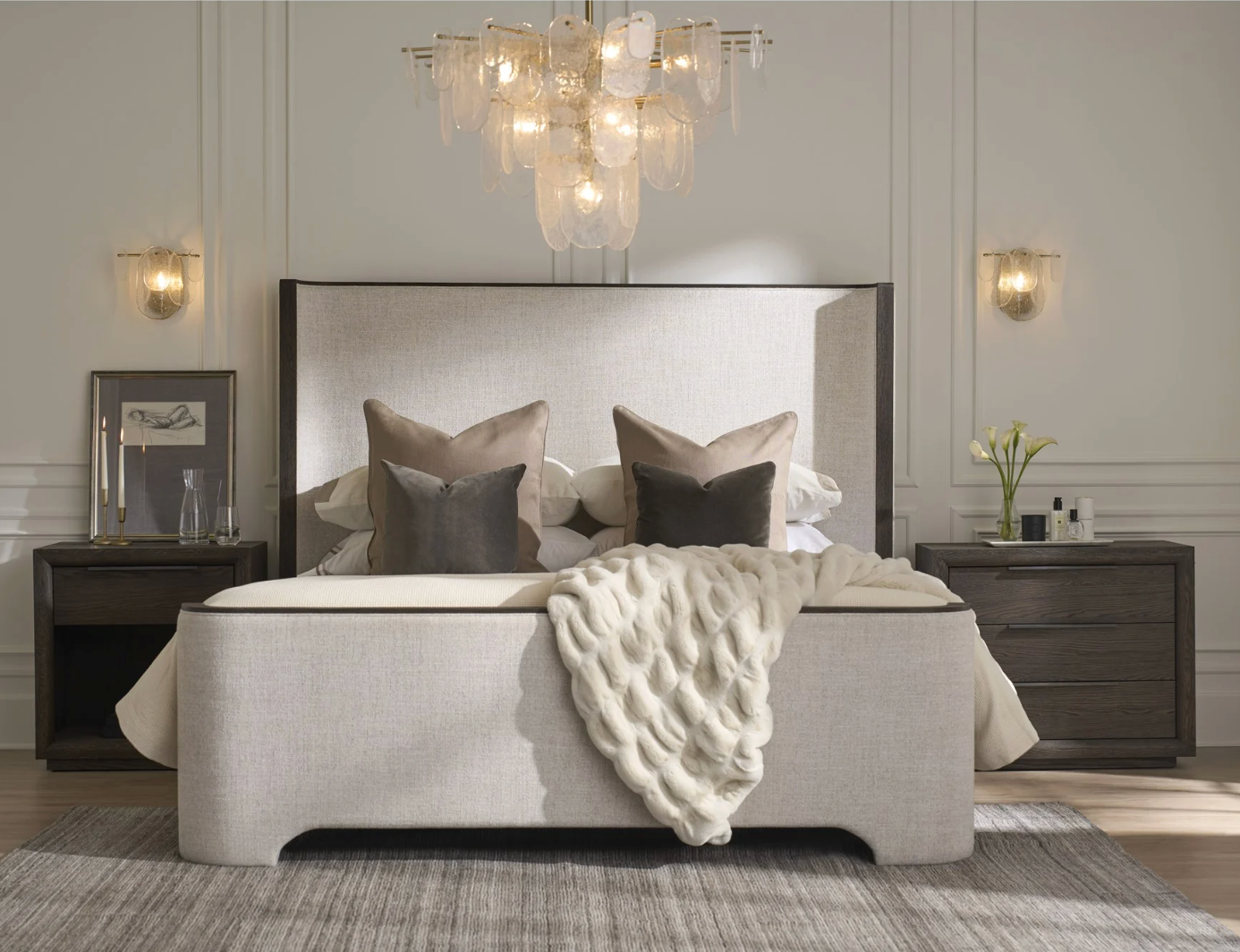
Tips for Buying Bedroom Lighting
Getting bedroom lighting right can make or break your space. Too bright and you'll never wind down. Too dim and you can't see what you're doing. The good news? With a few smart choices, you can create a bedroom that's both functional and dreamy.
Start With Your Room's Reality Check
Before you fall in love with that gorgeous chandelier, measure your space. Room size and ceiling height are your best friends when it comes to choosing fixtures that actually work.
For smaller bedrooms (under 108 square feet), stick with one main fixture plus a few accent lights. Think a ceiling-mounted piece paired with bedside lamps. For larger spaces (over 108 square feet), skip the single overhead light entirely. Instead, layer in light strips, downlights, or spotlights to avoid that "one lonely bulb in a big room" look.
Ceiling height matters too. Low ceilings call for flush mounts or recessed lights, while high ceilings can handle pendant lights or chandeliers that make a statement.
Layer Like a Pro
Here's the secret sauce: your bedroom needs multiple light sources. One overhead light trying to do everything is like wearing flip-flops to a hiking trail: technically possible, but not ideal.
Start with this basic formula: one light source on each side of your bed, plus one more in the opposite corner. Maybe that's a reading chair with a floor lamp or your dresser with a table lamp.
Want to go pro? Aim for five or more light sources. This gives you total control over your lighting mood: bright for getting dressed, soft for winding down, focused for reading.
Get Your Brightness Right
Nobody wants to squint while getting ready or feel like they're in an interrogation room. The key is matching your wattage to your room size.
For LED lights (which we always recommend), here's your cheat sheet:
- Small rooms (54-108 sq ft): 13-25W
- Medium rooms (108-161 sq ft): 25-38W
- Large rooms (161-215 sq ft): 38-50W
- Extra large rooms (215+ sq ft): 50W or more
Don't guess on this one. When you're shopping, ask about the fixture's light coverage area to make sure it'll actually illuminate your space properly.
Know Your Lighting Types
Think of bedroom lighting in three categories, each with its own job:
Ambient lighting is your room's general illumination: usually a ceiling fixture like a chandelier, flush mount, or pendant light. This sets the overall mood and provides basic visibility.
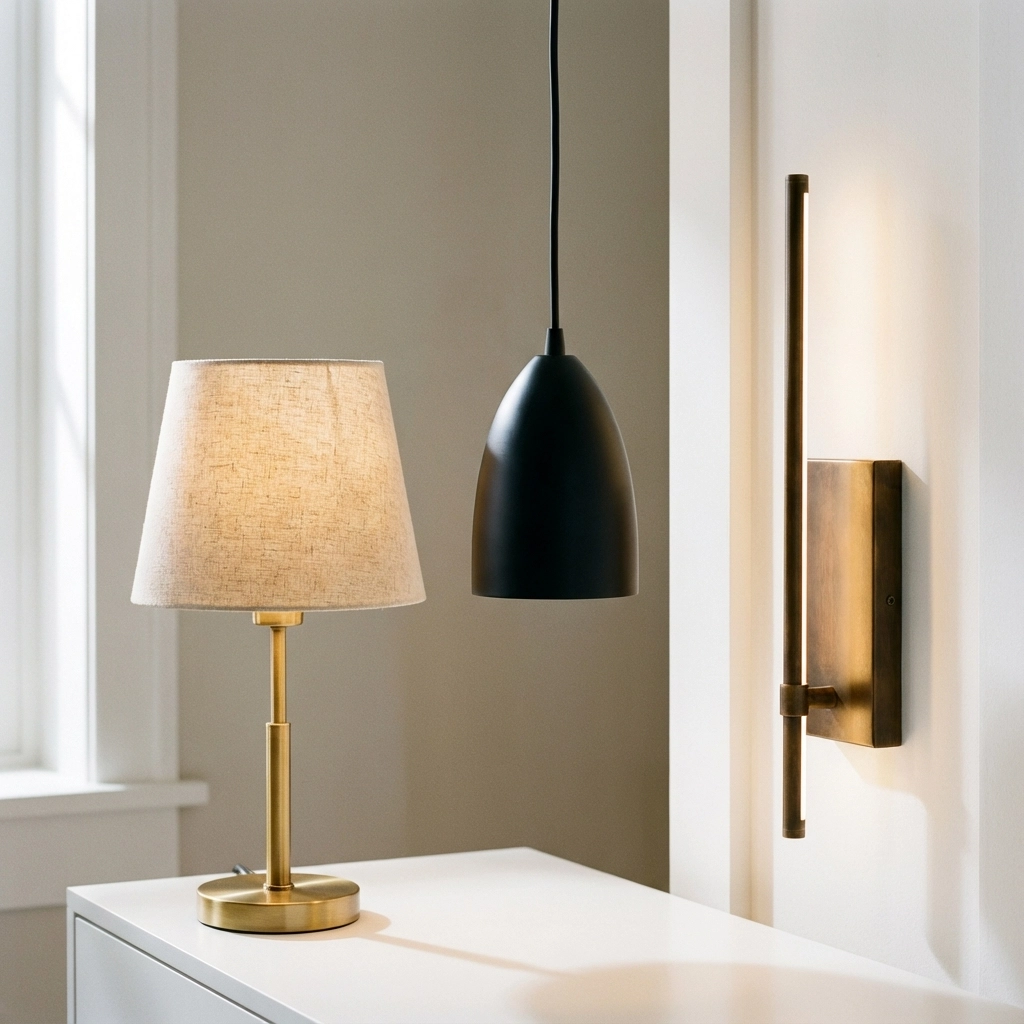
Task lighting is all about function. Bedside reading lamps, vanity lighting, or desk lamps for that corner workspace. Position desk lamps on your left side (right if you're left-handed) about 16 inches away from your work surface.
Accent lighting adds personality and depth. Picture lights, wall sconces, or decorative table lamps that highlight artwork or create cozy corners.
Color Temperature Matters More Than You Think
Here's where a lot of people go wrong: they pick cool, bright white bulbs for the bedroom. Don't do this to yourself.
Stick with warm white, soft white, or amber-toned lighting. Think candlelight vibes. This warmer light helps your brain transition into sleep mode instead of keeping you wired and alert.
Cool white light has its place (hello, closets and bathrooms), but your bedroom isn't one of them.
Scale and Placement: The Details That Make or Break It
Proportions matter. A tiny lamp on a massive nightstand looks lost. A huge fixture in a small room feels overwhelming.
For bedside lamps, aim for the bottom of the shade to sit at mattress height or slightly below. The shade width should be roughly two-thirds the width of your nightstand. This creates visual balance and keeps the light at the right level for reading.
Ceiling fixtures should be centered in the room, not over the bed (unless you enjoy bonking your head when you sit up). For pendant lights over nightstands, hang them 24-27 inches from the surface and make sure they don't block walking paths.

Invest in Quality Shades and Materials
Here's a game-changer most people overlook: the lampshade material makes a huge difference in light quality.
Skip the paper shades. Instead, go for stretched linen or silk. These materials diffuse light beautifully, creating that soft, warm glow that makes everything look better. They're easier on the eyes and cast those lovely, subtle shadows that add depth to your space.
Linen shades are particularly great: they're durable, timeless, and work with almost any decor style. They're worth the investment.
Don't Forget Dimmers
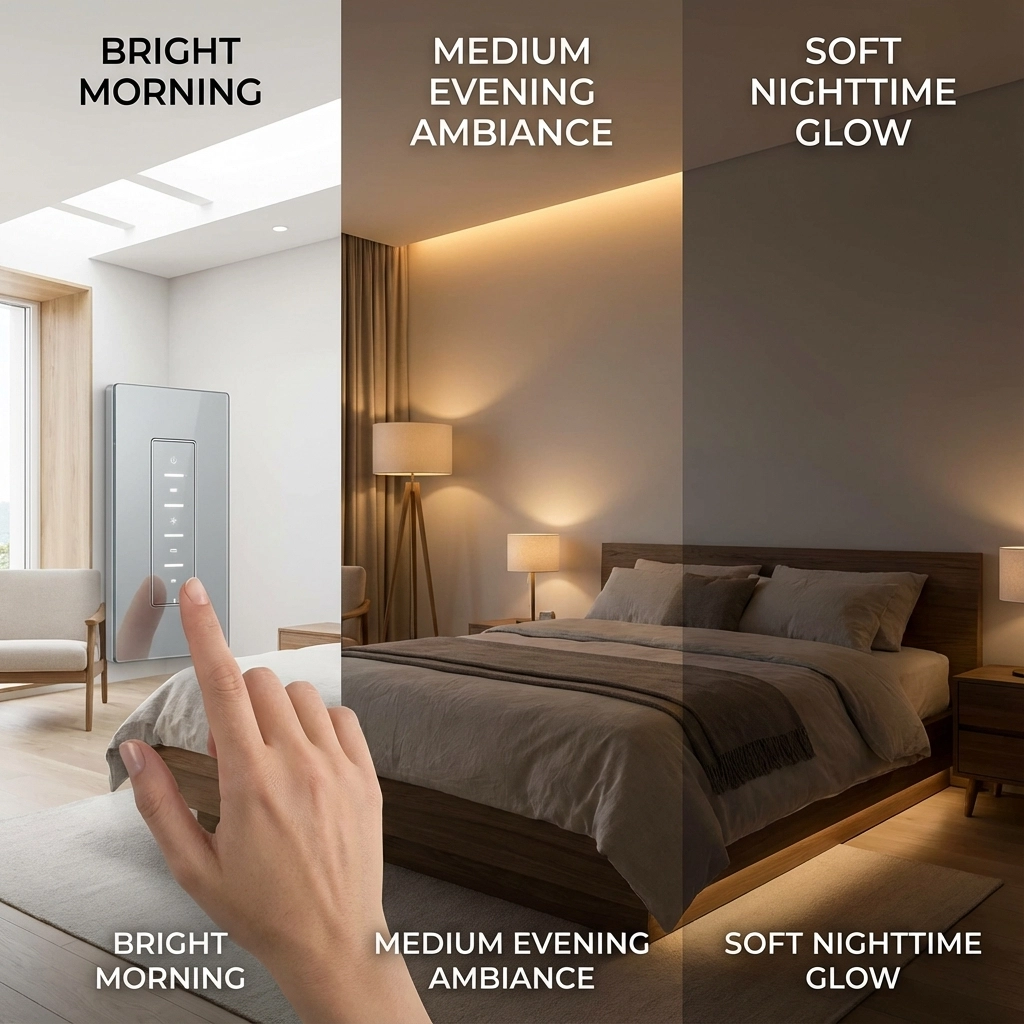
If you take nothing else from this post, remember this: put dimmers on everything you can. Seriously. Every ceiling fixture, every plug-in lamp that can handle it.
Dimmers give you control over your space's mood throughout the day. Bright for morning routines, medium for evening activities, low for bedtime wind-down. Some LED bulbs even come with built-in dimming features, which is perfect for lamps that can't be hardwired to a dimmer switch.
Think Style, Not Just Function
Your lighting should complement your bedroom's vibe, not fight against it. If you've got a modern minimalist space, that ornate crystal chandelier might not be the move (unless you're specifically going for that contrast).
That said, don't be afraid to let one fixture be a statement piece. A beautiful chandelier or unique pendant light can become a focal point that pulls your whole room together. Just make sure it's proportional to your space and: say it with me: put it on a dimmer.
Energy Efficiency That Actually Works
LED bulbs are your best friend. They last forever (often 2,000+ hours), use way less energy, and don't generate heat like older bulbs. Plus, they come in all the warm color temperatures you need for a cozy bedroom.
Many LED options include integrated dimmers or work with smart home systems, giving you even more control over your lighting. Some can even change color temperature throughout the day, mimicking natural light patterns.
Plan for Real Life
Think about how you actually use your bedroom. Do you read in bed? Make sure your bedside lighting is positioned so it illuminates your book without casting shadows. Do you get dressed in your bedroom? You'll need good general lighting plus maybe a full-length mirror with its own illumination.
Got a partner? Consider swing-arm wall sconces or individual bedside lamps so one person can read while the other sleeps. Little details like this make a huge difference in daily life.

The Bottom Line
Great bedroom lighting isn't about finding one perfect fixture: it's about creating a system of lights that work together. Layer your sources, choose warm tones, get your scale right, and always include dimmers.
Remember, you're not just lighting a room; you're creating an atmosphere. Take your time with these choices. Your future self (and anyone sharing the space) will thank you every single night.
Ready to start shopping? Focus on one layer at a time. Get your ambient lighting sorted first, then add task lighting, and finish with accent pieces. Before you know it, you'll have a bedroom that's both beautiful and brilliantly lit.